

Your local business might be invisible online despite having a great website and solid Google My Business profile. Potential customers search for services like yours every day, but they find your competitors instead.
This frustrating situation leaves many business owners scratching their heads, wondering what they’re doing wrong.
I faced this exact problem when helping clients improve their local search rankings. After implementing schema markup on hundreds of websites across Australia, I discovered something remarkable: businesses using structured data see up to 30% higher click-through rates than those without it.
The solution lies in helping search engines understand your content better through schema markup, a powerful tool that transforms how Google displays your business information.
This guide reveals the essential schema types that boost local SEO performance in 2025. You’ll learn practical implementation strategies, avoid common mistakes that trip up many businesses, and discover why schema markup gives your business a competitive edge over the competition down the road.
Ready to make your business stand out in local search results and attract more customers through your front door?
Key Takeaways
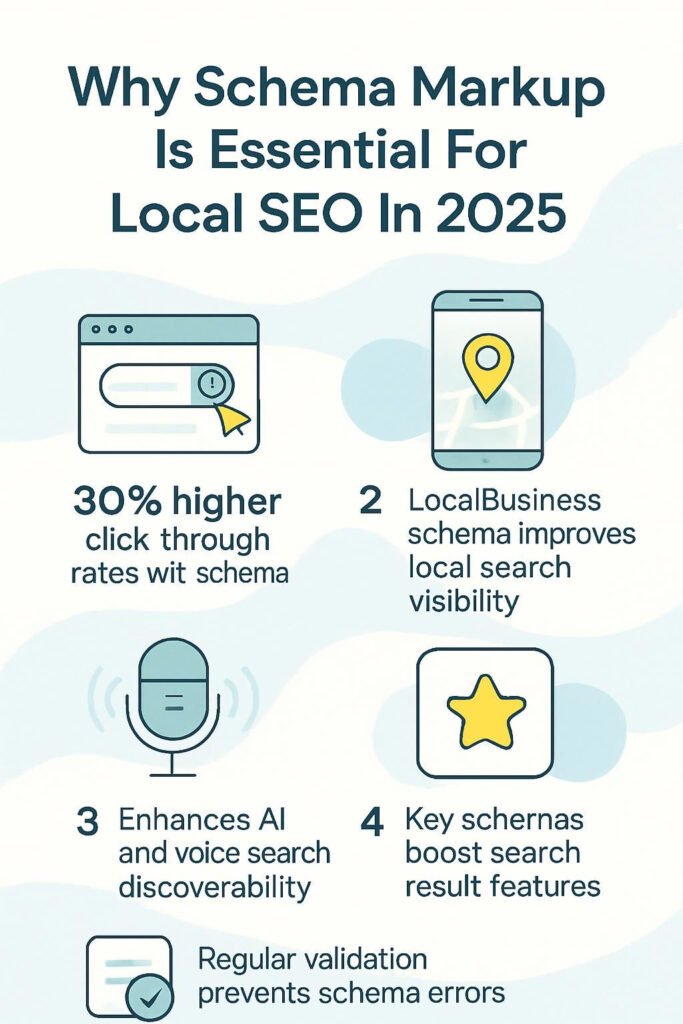
- Businesses using schema markup see up to 30% higher click-through rates and 58% more clicks than standard listings without structured data.
- LocalBusiness schema acts as a digital translator, helping Google understand business location, hours, and services for better local search visibility.
- Schema markup supports AI-driven search and voice recognition, making businesses more discoverable through conversational queries and smart speakers.
- Key schema types for local SEO include LocalBusiness, Review and Rating, FAQ, HowTo, Event, and Product schema for enhanced search results.
- Regular validation using Google’s Schema Markup Validator prevents syntax errors and maintains accurate business information for search engines.
What is schema markup?
Now that I’ve covered why schema markup matters for local businesses, let me explain exactly what this powerful tool actually is.
Schema markup acts like a translator between your website and search engines. Think of it as adding labels to items in a grocery store, where each label tells shoppers exactly what they’re looking at.
This structured data provides search engines with a standardised vocabulary that helps them categorise your web content more effectively. The markup language doesn’t change how your website looks to visitors.
Instead, it works behind the scenes as metadata that helps search engines understand the relationships between different pieces of information on your pages.
Schema markup is extra code added to your website that helps search engines understand your content.
Search engines use this structured data to build their knowledge graph and improve semantic search results. The code creates rich snippets that display additional information directly in search results, such as star ratings, business hours, and contact details.
Common schema types include Local Business, FAQ, How-To, Product, Review, and Article Schema. Each type serves a specific purpose in digital marketing and search engine optimisation.
This content categorisation system helps AI systems process your information more accurately, leading to better visibility in search results.
How schema markup improves local SEO in 2025
Schema markup acts as a translator between your website and search engines, helping Google understand exactly what your local business offers and where you operate. In 2025, this structured data becomes even more critical as AI-powered search features rely heavily on clear, organised information to deliver accurate local results to users.
How does schema markup help search engines understand local content?
Structured data acts like a translator between your website and search engines. I’ve watched Google struggle to interpret basic business information without proper markup. Your address might appear as plain text to visitors, but search engines need clear signals to understand location details.
Markup transforms vague content into precise data points that algorithms can process instantly.
Search engines rely on business attributes to match local queries with relevant results. Geographic context becomes crystal clear through structured markup implementation. Your opening hours, contact details, and service areas gain meaning beyond simple text.
This clarity helps search engines connect your business with nearby customers searching for specific services.
Content organisation through markup creates a roadmap for search engine crawlers. Information optimisation happens automatically as algorithms identify key business elements. Local SEO performance improves because search engines can accurately index your location-specific content.
Customer experience benefits flow naturally from this enhanced understanding, as search results become more precise and relevant to user intent.
How does schema markup increase visibility in Google Maps and Local Pack?
After search engines grasp your local content better, they can showcase your business more prominently in Google Maps and Local Pack results. LocalBusiness schema provides essential information that Google uses to populate these prime real estate spots in search results.
I’ve watched businesses jump from page two obscurity to Local Pack prominence simply by implementing proper structured data.
Schema markup increases the likelihood of appearing in Google’s Local Pack and Knowledge Panel through rich, detailed business information. Google Maps relies heavily on schema data to display accurate business hours, contact details, and location information.
Rich snippets generated by schema markup boost click-through rates (CTR) for businesses, making your listing stand out against competitors who lack this structured approach. During my two decades optimising local businesses, the difference between schema-enhanced and basic listings is like comparing a neon sign to a handwritten note.
Schema markup acts as a direct communication channel with Google, telling search engines exactly what your business offers and where customers can find you.
How does schema markup support AI-driven and voice search optimisation?
AI-driven search engines in 2025 rely heavily on structured data to understand and process local business information accurately. Schema markup acts as a translator between your website content and artificial intelligence algorithms, providing clear signals about your business location, services, and operating hours.
Through my work at SchemaGenix.com, I’ve observed how AI technology interprets schema markup to deliver precise answers for voice recognition queries. Local businesses that implement proper structured data see improved visibility in conversational search results, as AI systems can quickly extract relevant details about service area definitions and business offerings.
Voice search queries typically involve longer, more conversational phrases that require detailed business representation through structured data. Audio search functionality depends on schema markup to identify which businesses match specific location-based requests.
Google’s Speakable feature in beta testing demonstrates how structured data enables content to be read aloud during voice interactions. Schema markup supports data representation that helps voice assistants understand context, location relevance, and business credibility, making your local business more discoverable through emerging search technologies.
Key schema types for local SEO
Different types of schema markup work like specialised tools in your local SEO toolkit – each one serves a specific purpose to help search engines understand exactly what your business offers and where you operate, making your listings stand out in local search results.
What is LocalBusiness schema?
LocalBusiness schema acts as a digital business card that search engines can easily read and understand. This structured data markup tells Google exactly what your business does, where it operates, and how customers can reach you.
LocalBusiness schema is a subtype of both Organisation and Place schema types, focusing specifically on physical locations for local searches. Think of it as speaking Google’s language directly, rather than hoping the search engine figures out your business details on its own.
LocalBusiness schema transforms your website from a silent brochure into a chatty salesperson that never stops working.
The markup includes essential details like your business name, address, telephone number, and opening hours. Examples of LocalBusiness schema include restaurants, banks, medical practices, and bowling alleys.
Each business type gets specific properties that match what customers typically search for. A restaurant schema might highlight cuisine type and price range, while a medical practice would emphasise specialties and appointment booking information.
This structured data creates consistency between your website and Google Business Profile information. Search engines love this reliability because it builds trust in your business listing.
LocalBusiness schema also plays a key role in voice search optimisation, helping AI assistants provide accurate answers about your business. Since not all competitors adopt this markup properly, accurate implementation gives you a competitive advantage in local search results.
How do Review and Rating schema boost local SEO?
Review schema acts like a digital magnet for local businesses. I’ve watched countless Sydney businesses transform their search presence simply by displaying star ratings directly in search engine results pages.
These golden stars catch the eye faster than plain text listings. High ratings create instant trust with potential customers browsing local search results. The visual appeal of star ratings makes businesses stand out in Google’s Local Pack like a beacon in the night.
Customer feedback becomes a powerful marketing tool through structured data implementation. Positive reviews displayed in SERPs boost clickthrough rates significantly. This increased engagement sends positive signals to search engines about business quality.
Review schema doesn’t directly improve rankings, but it creates a competitive advantage in crowded local markets. Regularly updating this structured data maintains credibility and keeps customer testimonials fresh.
The next crucial schema type for local businesses involves addressing common customer questions through FAQ markup.
Why use FAQ and HowTo schema for local SEO?
Moving beyond review and rating schema, FAQ and HowTo schema present powerful opportunities for local search optimisation. These structured data types allow businesses to answer common customer questions directly in search results, creating rich snippets that catch attention immediately.
FAQ schema transforms repetitive customer inquiries into valuable search assets. Service-based businesses benefit most from this approach, as they can address common concerns before customers even visit their website.
HowTo schema works differently by providing step-by-step instructions that establish authority within the local community. Both schema types drive more traffic by appearing prominently in local search queries, making listings more attractive and informative than standard results.
Mobile users particularly appreciate FAQ-rich results since they save clicks and provide instant answers. This comprehensive schema strategy builds customer trust while positioning businesses as helpful local resources.
How does Event schema benefit local businesses?
Event schema acts like a digital megaphone for local businesses hosting community events. This structured data allows businesses to display event details directly in search engine results, making their local events impossible to miss.
From my experience working with Sydney businesses, I’ve watched event schema transform how customers discover local happenings. The markup showcases crucial information like dates, times, locations, and ticket prices right in the SERPs.
Local restaurants promoting wine tastings, fitness studios advertising yoga workshops, and retail stores announcing sales events all benefit from this enhanced visibility.
Event schema creates a direct pipeline between businesses and their target audience searching for local events. The structured data helps Google display up-to-date event information to users actively seeking community engagement opportunities.
Combining event schema with LocalBusiness schema amplifies the effect, creating a powerful one-two punch for local SEO strategies. This approach streamlines event discovery for local customers while expanding audience reach beyond traditional marketing channels.
Time-sensitive information gets the spotlight it deserves, driving higher attendance rates and stronger community connections.
The markup transforms ordinary search listings into rich, informative displays that grab attention and drive action. Event promotion becomes more effective as the schema helps businesses reach new audiences who might never have discovered their events otherwise.
Accurate event schema implementation can significantly increase attendance numbers while building lasting relationships with the local community. The enhanced visibility in search results creates more opportunities for meaningful customer interactions and business growth.
What role do Product and Offer schema play in local SEO?
Product schema acts like a digital shop window for local businesses. This structured data provides detailed information about your products, generating rich results that showcase reviews, pricing, and availability directly in search results.
Local customers can see star ratings, prices, and stock levels before clicking through to your website. Product schema enhances search result relevance by providing context and details that help search engines understand what you’re selling.
This improved visibility leads to higher engagement by appealing to consumer interests right from the search page.
Offer schema allows businesses to showcase deals, promotions, and special discounts in search results. Local customers actively seeking bargains can spot your offers immediately, making your business stand out in competitive local markets.
After implementing offer schema for several clients’ websites, the click-through rates improved significantly because potential customers could see valuable promotions before visiting the site.
Both schema types help businesses capture attention in crowded search results, turning browsers into buyers through strategic information display.
Incorporating these schemas can improve click-through rates by presenting valuable information that drives consumer engagement. Product and offer schema align with search engine algorithms, boosting search engine visibility for local businesses.
Regular updates remain vital for maintaining relevance and accuracy in local SEO strategies. These schema types work particularly well for ecommerce listings, helping local retailers compete with larger online stores by highlighting their unique selling points and special offers directly in search results.
What are the benefits of using schema markup for local SEO?
Schema markup transforms your local business into a digital powerhouse that search engines can’t ignore, delivering benefits that directly impact your bottom line and customer acquisition.
How does schema improve rich results like star ratings and business hours?
Schema markup transforms plain search listings into eye-catching rich results that grab attention on search engine results pages. I’ve watched businesses see their click-through rates jump by 58% after implementing structured data that displays star ratings, business hours, and contact details directly in search results.
Local Business Schema provides essential details such as operating hours, making it simple for customers to find what they need without clicking through to your website first.
Rich snippets generated through schema can lead to 58% more clicks compared to standard listings because they display additional information like images and reviews right in the search results.
Your business listing stands out like a beacon among plain text competitors when search engines can show your five-star rating, opening hours, and phone number directly in the search results.
This enhanced visibility builds trust before potential customers even visit your site, giving you a massive advantage in local search competition. These improvements in business visibility naturally lead to better customer engagement across all digital touchpoints.
Why do schema-enhanced listings get higher click-through rates?
Rich snippets grab attention like bright shop windows on a busy street. I’ve watched countless clients see their click-through rates jump after implementing structured data on their websites.
These enhanced listings display star ratings, business hours, prices, and other valuable information directly in search results. Users prefer these visually appealing results because they provide more context before clicking.
Statistics show that 58% of users favour rich results over standard search listings. Enhanced listings create a web of context that improves organic search results performance significantly.
Star ratings catch the eye immediately, while product prices help users make quick decisions. FAQ and How-To markup displays answers directly in search results, boosting user engagement before visitors even reach your site.
Metadata transforms plain search listings into compelling previews of your business. Product and Review markup highlights customer feedback, building trust and appeal instantly. These enhanced listings stand out from competitors who still use basic search results.
The visual appeal and extra information encourage more clicks from potential customers browsing local search results.
How does schema markup increase credibility and trust with customers?
Schema markup acts like a digital badge of authenticity for your business. After two decades of optimising websites, I’ve watched structured data transform how customers perceive businesses online.
Rich snippets generated by schema provide valuable information directly in search results, enhancing trust before visitors even click through to your site. This immediate transparency creates a powerful first impression.
Proper schema implementation allows businesses to showcase verified customer feedback, accurate business hours, and current contact details. Schema-enhanced listings help build trust, especially for first-time visitors who need quick reassurance about your legitimacy.
The structured data clarifies webpage content, improving a site’s credibility over time as search engines recognise your commitment to transparency.
Displaying accurate and current information through schema fosters trust with potential customers who can see your star ratings, opening hours, and location details at a glance. Regular testing and validation maintain this trustworthiness by keeping your structured data reliable and recognised by search engines.
Including author and publication info via Article schema supports brand visibility and demonstrates professional credibility. Schema markup enables the presentation of verified customer reviews that serve as social proof, making your business appear more trustworthy than competitors without this enhanced visibility.
Now let’s explore the practical steps for implementing schema markup on your website.
How can you implement schema markup on your website?
Adding schema markup to your website doesn’t require rocket science skills. I’ll walk you through three practical methods that work for different skill levels and website setups.
How to use schema markup generators or plugins?
Schema markup generators and plugins transform complex structured data implementation into a straightforward process. These tools eliminate the need for extensive coding knowledge while maintaining professional SEO standards.
- Access popular plugins like Yoast, RankMath, or Schema Pro through your content management system dashboard to automatically generate schema markup based on your content type.
- Navigate to plugin settings and select appropriate schema types for each page using simple checkboxes and dropdown menus that match your business requirements.
- Complete schema fields by entering business information such as address, phone number, operating hours, and service descriptions directly into the user interface.
- Configure LocalBusiness schema settings within your chosen plugin to display essential local information like location coordinates and business categories.
- Enable Review and Rating schema options to showcase customer feedback and star ratings in search results through automated plugin features.
- Generate JSON-LD code automatically by selecting relevant schema types, allowing the plugin to create valid markup language without manual coding effort.
- Test generated schema using Google Rich Results Test tool to verify proper implementation and identify any validation errors before publishing content.
- Monitor plugin dashboard regularly to confirm schema output matches your selected settings and business information remains current across all pages.
- Update schema information through plugin interfaces rather than editing code directly, reducing the risk of syntax errors in your website optimisation efforts.
- Validate schema markup monthly using Google’s Structured Data Testing Tool to maintain rich snippets performance and search engine visibility.
How to add JSON-LD code manually?
While schema markup generators offer convenience, manual JSON-LD code implementation gives you complete control over your structured data. Advanced users often prefer this method for custom schema requirements that automated tools can’t handle.
- Access your website’s page editor and paste the JSON-LD code directly into the HTML section of your target page.
- Open your theme files like header.php or functions.php to add the structured data code for site-wide implementation.
- Copy your JSON-LD schema code and place it between the opening and closing head tags of your webpage.
- Test your manual code implementation using Google’s Rich Results Test to check for errors and missing fields.
- Match your schema markup content exactly with the visible page content to avoid search engine confusion.
- Save your changes and verify that the JSON syntax displays correctly in your page source code.
- Run content validation checks to confirm your structured data follows proper formatting guidelines.
- Create custom schema types for unique business requirements that standard generators cannot accommodate.
- Monitor your rich snippets in search engine results after implementing the manual JSON-LD code.
- Update your manually coded schema whenever you change business information or page content details.
How to validate schema using Google’s Structured Data Testing Tool?
Google’s Structured Data Testing Tool has been retired and replaced by the Schema Markup Validator. This new tool checks Schema.org structured data on web pages and helps maintain data accuracy for search engines.
- Access the Schema Markup Validator through Google Search Console or visit the official Schema.org validator page directly
- Copy your web page URL or paste your JSON-LD schema code directly into the validation tool’s input field
- Click the “Validate” button to run the structured data analysis and identify any syntax errors in your schema markup
- Review the validation results carefully, as the tool highlights specific errors and warnings that need immediate attention
- Fix any syntax errors shown in red, as these prevent search engines from reading your structured data properly
- Use the Rich Result Test alongside the Schema Markup Validator to see what Google results your pages can generate
- Test individual schema types like LocalBusiness, Review, and FAQ schema separately to isolate specific validation issues
- Validate your schema markup after every website update or content change to maintain ongoing accuracy
- Check that all required properties for your chosen schema types appear correctly in the validation results
- Save screenshots of successful validation results as documentation for your web development team
- Run validation tests on mobile and desktop versions of your web pages to catch device-specific issues
- Schedule monthly validation checks to catch any schema markup degradation over time
- Address Google-specific warnings by using additional Google tools, since the Schema Markup Validator doesn’t provide these alerts
Regular validation keeps your structured data error-free and helps search engines understand your local business information better. Next, let’s explore the common mistakes you should avoid when implementing schema markup.
What common mistakes should you avoid with schema markup?
I’ve watched businesses crash and burn because they made basic schema markup errors. These mistakes can hurt your local search rankings and confuse Google’s crawlers about your business information.
Why is inaccurate or outdated information harmful?
Inaccurate or outdated information in schema markup creates a domino effect that damages your online visibility and business credibility. Search engines lose trust in your website when they find mismatched data between your schema and actual business details.
This broken trust leads to decreased website traffic as search algorithms push your site down in rankings. Users who encounter wrong phone numbers, incorrect opening hours, or outdated addresses experience poor user experience that drives them straight to competitors.
Outdated schema markup acts like a broken compass for search engines, causing businesses to disappear from relevant search results completely. Regular updates become critical for maintaining SEO success, especially for details that change frequently like seasonal hours or special offers.
Mismatched information between your schema and business profiles sends confusing signals to Google, harming your chances of appearing in local search results where customers make quick decisions based on trustworthiness and information accuracy.
What are the risks of overusing or misusing schema types?
Schema markup can backfire spectacularly if you get it wrong. Misuse of schema markup can confuse search engine crawlers, leading to reduced site visibility. Using the wrong schema type creates serious problems.
Product markup on service pages misleads search engines about your business. This misconfiguration sends mixed signals to Google’s algorithms.
Conflicting markup types create contradictory signals for search engines. Your website becomes harder to understand. Overusing markup types may cause confusion rather than clarity.
Search engines prefer fewer, well-defined types over scattered implementations. Improperly constructed JSON creates technical nightmares. Unclear definitions lead to misconfiguration that damages your rankings.
Spammy schema markup triggers penalties from search engines. Overloading pages with structured data obscures your primary message. Crawlers struggle to identify what matters most. Clarity and correctness in semantic markup prove crucial for search engine comprehension.
Poor implementation hurts website visibility more than having no markup at all.
Why should you regularly validate and test your schema?
I’ve learnt through years of SEO work that treating structured data like a “set and forget” task leads to problems. Search engines can’t read schema markup with syntax errors. This makes all your hard work invisible.
Google’s Rich Results Test becomes your best friend for catching these issues before they hurt your rankings.
Testing reveals missing fields and typos that slip past during implementation. Conflicting information from overlapping schema types confuses search engines about your business details.
I use schema validators regularly because they spot problems that manual checking misses. Code accuracy directly impacts whether your markup gets recognised and displayed in search results.
Keeping schema data updated matters more than most website owners realise. Business hours change, phone numbers update, and addresses shift. Outdated markup sends wrong signals to potential customers.
Regular validation helps maintain ongoing accuracy for frequently changing details. This practice prevents the embarrassing situation where Google shows incorrect information about your business to searchers.
Future trends in schema markup for local SEO
The future of schema markup for local SEO looks bright as AI-powered search features become more sophisticated and voice search continues to grow. I see businesses that adapt their structured data strategies now will dominate local search results in the coming years.
How will AI-powered search features integrate with schema?
AI-powered search features now depend heavily on structured data to extract and display business information accurately. Google’s AI Overviews pull details directly from schema markup to create those helpful business summaries you see at the top of search results.
This integration means your LocalBusiness schema feeds directly into AI-generated content that potential customers encounter first.
AI models require real-time schema updates to maintain accuracy in their responses. Search algorithms use this structured data to personalise user experiences based on location, preferences, and search history.
Advanced schema types will become more valuable as AI-driven search interfaces evolve to understand complex business relationships and services.
Why is voice and conversational search compatibility growing?
Building on how AI-powered features transform search, voice recognition technology has sparked a massive shift in user behaviour. Millions of smart speakers sell annually, creating a surge in voice search usage across Australia and globally.
This trend moves us away from traditional typed queries toward natural language processing patterns.
Voice search queries differ dramatically from typed searches. People speak in longer, conversational phrases rather than short keyword strings. A typed search might be “pizza delivery Sydney,” while a voice query becomes “Where can I find the best pizza delivery near me tonight?” This shift demands schema markup that supports conversational AI responses and featured snippets.
Smart devices continue flooding the market, making voice compatibility essential for local businesses. Search engine optimisation now requires focus on longtail keywords and user intent understanding.
Schema markup helps search engines interpret conversational queries and deliver accurate voice answers. Local search optimisation must adapt to this growing trend, as businesses risk losing visibility without proper voice search preparation.
What advanced schema types will improve business representation?
Advanced schema types act like digital business cards that speak directly to search engines and AI systems. Product and offer schema types deliver detailed, rich information that transforms basic business listings into comprehensive showcases.
These structured data formats help search engines understand your inventory, pricing, and special deals with crystal clarity. My agency has implemented these schemas for numerous Sydney clients, resulting in enhanced visibility across Google’s search features.
FAQ and HowTo schema types position your business as an authority in your local market. These schemas support inclusion in AI-powered summaries and overviews, giving you prime real estate in search results.
Event schema adds significant value for businesses hosting local events, workshops, or community gatherings. Local restaurants using event schema for cooking classes see increased foot traffic and bookings.
Review and Rating schema build trust and appeal for potential customers browsing your business listings.
Nested schema creates powerful connections between different business elements, improving SEO performance through clearer entity relationships. JSON-LD format makes implementing these advanced schema types efficient and compatible with modern web standards.
Regularly adding and updating these schema types keeps your business representation fresh and comprehensive. The knowledge graph benefits from this structured approach, positioning your business prominently in local search results and voice search responses.
Conclusion
Schema markup gives local businesses a clear advantage in 2025’s competitive digital landscape. Smart business owners who implement structured data now will see better search rankings and higher click-through rates.
Google’s AI-powered search features rely heavily on this markup to deliver accurate local results to users. Don’t let competitors gain the upper hand while your business stays invisible online.
Start adding schema markup today and watch your local search presence grow stronger.
FAQs
1. What is schema markup and why does it matter for local businesses in 2025?
Schema markup is structured data code that helps search engines understand your website content better. It acts like a translator between your business information and Google’s crawlers. For local businesses, this code tells search engines exactly where you’re located, what services you offer, and when you’re open.
2. How does schema markup boost local search rankings?
Schema markup gives search engines crystal-clear signals about your local business details. This structured data helps Google display rich snippets in search results, making your listing stand out from competitors. When search engines can easily read your business information, they’re more likely to show your website to local customers.
3. Which types of schema markup work best for local SEO?
Local business schema is your bread and butter for location-based searches. Review schema showcases customer ratings directly in search results. Opening hours schema prevents frustrated customers from showing up when you’re closed.
4. Can small businesses implement schema markup without technical expertise?
Most content management systems now offer plugins that add schema markup automatically. Google’s Structured Data Markup Helper walks you through the process step by step. However, getting a web developer to implement custom schema often delivers better results for competitive local markets.