

Voice search has completely transformed how people find information online. Your website might rank brilliantly for traditional searches, but voice assistants like Siri and Alexa often bypass your content entirely.
This happens because voice search relies on different signals than regular text searches, leaving many website owners feeling frustrated with declining visibility.
This exact challenge hit home when clients began asking why their sites weren’t appearing in voice search results. Through extensive research and testing, the discovery emerged that schema markup serves as the bridge between your content and voice assistants.
Over 125 million individuals across the U.S. use voice search regularly, making this optimisation absolutely crucial for modern websites. Schema markup helps search engines understand your content structure, making it far more likely to appear in voice search responses and featured snippets.
This guide reveals how schema markup transforms your SEO strategy for voice search success. You’ll learn which schema types work best, how to implement them properly, and see real examples from brands that boosted their voice search visibility.
Ready to unlock your voice search potential?
Key Takeaways
- Schema markup makes websites 35% more likely to appear in voice search results by helping search engines understand content structure and meaning.
- Over 125 million Americans use voice search regularly, making schema implementation crucial for modern website visibility and competitive advantage.
- FAQ schema and Local Business schema work best for voice search optimisation, providing direct answers and location-based information that voice assistants prefer.
- JSON-LD format serves as Google’s preferred method for implementing schema markup due to its efficiency and ability to avoid disrupting existing website structure.
- Major brands like Domino’s Pizza, Starbucks, and Walmart achieved significant success using schema markup, with Starbucks reporting a 16% sales increase through voice integration.
What is schema markup and how does it work in SEO?
Now that we understand voice search’s growing importance, let me explain the foundation that makes it all possible.
Schema markup consists of structured data tags that website owners add to their web page code. These tags help search engines understand content more clearly than plain HTML alone.
I’ve implemented JSON-LD schema on hundreds of client sites over the years, and this method stands out as the most user-friendly and adaptable approach. The markup acts like a translator between your website content and search engines, providing valuable information for better query matching with relevant web pages.
Search engines use this structured data to create rich snippets, knowledge panels, and local business details in search results. Common schema types include ratings, reviews, breadcrumbs, and FAQs, which directly improve site visibility and user experience.
Schema markup bridges the gap between human language and machine understanding, making your content speak directly to search engines.
This structured approach transforms how search engines interpret your content. Instead of guessing what your page discusses, search engines receive clear signals about your business details, products, services, and content topics.
The markup can increase click-through rates and search rankings by making your listings more attractive and informative. JSON-LD format allows you to add this code without disrupting your existing website structure, making implementation straightforward for most website owners.
Regular monitoring and reviewing of schema remains crucial for maintaining and enhancing SEO performance across all search result formats.
How does schema improve voice search results?
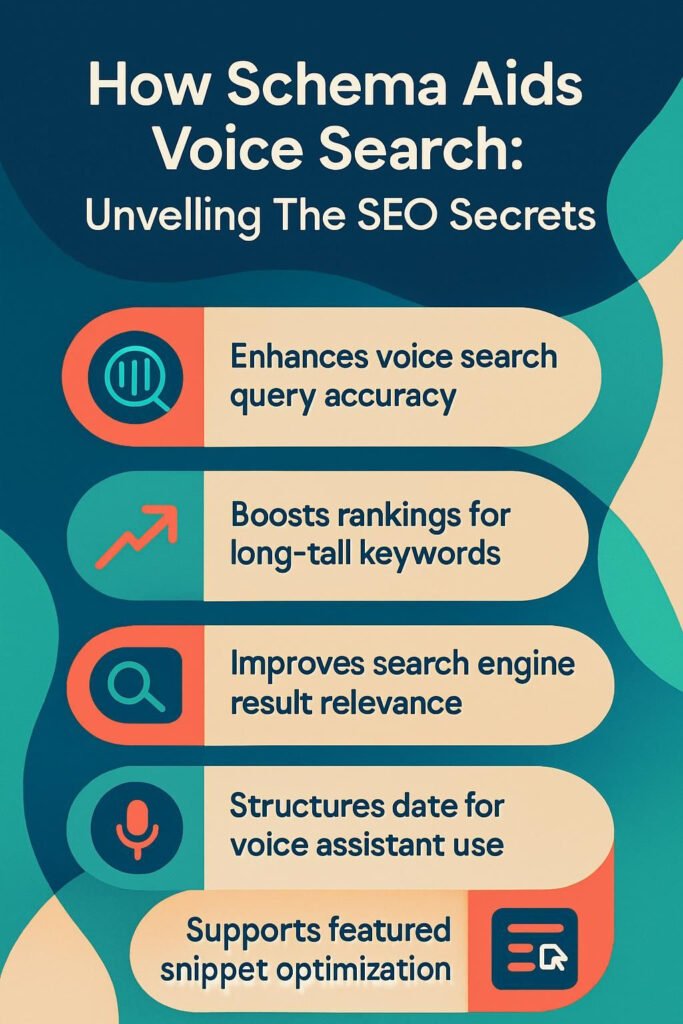
Schema markup acts as a translator between your website content and search engines, making your information far more accessible to voice search algorithms. Voice assistants like Siri, Alexa, and Google Assistant rely heavily on structured data to understand what your content means and how it relates to user queries.
Websites with proper schema markup are 35% more likely to appear in voice search results because search engines can quickly identify and extract the most relevant information. This structured approach helps voice assistants deliver precise answers to users’ questions, positioning your content as the preferred source for voice responses.
Voice search queries differ significantly from traditional text searches, as they tend to be longer and more conversational in nature. Schema markup bridges this gap by providing search engines with detailed context about your content, including relationships between different pieces of information and the specific intent behind your pages.
The markup enables search engines to match your content with complex voice queries that often include longtail keywords and natural language patterns. This enhanced understanding leads to better content alignment with user intent, making your website more likely to be selected as the source for voice search responses.
Case studies demonstrate the powerful impact of detailed schema implementation on voice search visibility, with some websites experiencing traffic increases of over 180%. JSON-LD format serves as the preferred method for implementing schema markup due to its efficiency and simplicity, as recommended by Google.
Rich snippets generated from proper schema markup provide voice assistants with the concise, structured information they need to formulate accurate responses. Search engine optimisation strategies that incorporate targeted schema types create a competitive advantage in the growing voice search landscape, where users expect immediate and accurate answers to their spoken queries.
Key benefits of schema for voice search
Schema markup delivers powerful advantages that transform how voice assistants find and present your content to users.
How does schema enhance search engine understanding?
Search engines struggle to interpret unstructured data on websites. I’ve witnessed this challenge firsthand through my 20 years in SEO. Schema markup converts unstructured data into structured data, creating a clear language that search engines can easily process.
This transformation helps Google and other search engines understand exactly what your content means rather than guessing.
Structured data acts like a roadmap for search engines crawling your site. Schema.org provides the official vocabulary library that standardises this process across the web. The markup language tells search engines whether your content discusses a product, service, event, or business location.
This enhanced understanding feeds directly into Google’s Knowledge Graph, building a more detailed representation of your website’s content. The result is quicker indexing and improved rankings for sites that implement proper schema markup.
This improved understanding directly translates to better visibility when people use voice search to find information.
How does schema improve visibility in voice search results?
Schema markup acts as a direct communication bridge between your website content and voice assistants like Siri, Alexa, and Google Assistant. Voice search prioritises concise, well-structured content, making schema vital for effective summarisation by AI systems that need to deliver quick, accurate responses to spoken queries.
Structured data transforms your content into easily digestible information blocks that voice assistants can quickly parse and understand. FAQ Schema increases the chances of being cited in voice responses, especially for question-based queries, while HowTo Schema helps deliver clear step-by-step instructions that work perfectly for voice-activated searches.
Local Business Schema boosts visibility in local search queries by providing essential business information that voice assistants need to answer location-based questions.
Proper implementation of structured data enhances crawlability and indexability, which are fundamental pillars for voice search optimisation success.
The next crucial element to explore involves understanding the specific types of schema markup that deliver the strongest results for voice search optimisation.
Types of schema markup relevant to voice search
Different schema markup types provide unique advantages for voice search optimisation, with each format addressing specific search patterns and user intent scenarios.
What is speakable schema and how is it used?
Speakable schema represents Google’s specialised markup tool for voice search optimisation, though it remains in beta testing with access limited to news publishers in the United States.
This structured data markup allows content creators to highlight specific excerpts from their articles, making them more likely to appear in voice search results. Google treats these marked sections similarly to featured snippets, giving them priority when voice assistants read content aloud to users.
Content marked with speakable schema must meet strict quality standards to qualify for voice search inclusion. The text needs clarity, accuracy, proper grammar, and complete author details while containing minimal advertisements.
Google prohibits hate speech or vulgar language in speakable content, ensuring family-friendly voice search results. Publishers must write in short sentences using natural, conversational tones to maximise effectiveness.
The current beta status means speakable schema doesn’t influence traditional SEO rankings yet, leaving its long-term impact on search engine results uncertain. News organisations using this markup can enhance their visibility in voice search results by following Google’s content guidelines precisely.
FAQ schema offers another powerful approach for voice search enhancement across different content types.
How does FAQ schema support voice search?
FAQ schema provides quick answers directly on search engine results pages, improving user search experiences for voice search queries. This structured data format enhances visibility of listings, leading to higher click-through rates for voice queries.
FAQ schema is eligible for voice search actions, making it particularly relevant for users of voice-assisted technology.
Through my work at SchemaGenix.com, I’ve observed that FAQ schema delivers one clear answer per question, ensuring clarity in voice search results. Best practices include ensuring questions and answers remain visible on the page, which aids voice search optimisation.
Voice assistants prefer this format because it provides direct, structured responses that match natural speech patterns. The schema creates rich snippets that stand out on search engine results pages, giving websites a competitive advantage in voice search visibility.
Next, we’ll explore why local business schema plays a crucial role in voice search success.
Why is local business schema important for voice search?
Moving from FAQ schema’s conversational benefits, local business schema takes voice search optimisation to another level for location-based queries. Local Business Schema provides essential details about a business’s location, operating hours, and services that voice assistants desperately need to deliver accurate responses.
This structured data facilitates “near me” recommendations, which are common in voice search queries, making your business discoverable through natural speech patterns.
Voice assistants rely heavily on this markup to understand business information quickly and present it in spoken results. The schema enhances visibility in voice search results while optimising local search presence by giving crawlers structured information about the business.
Smart speakers and mobile voice searches align with the conversational nature of voice search queries, improving customer engagement through precise geolocation data and comprehensive business listing details that support effective information retrieval in digital marketing strategies.
How to implement schema for voice search
I’ve developed effective methods to add schema markup that voice assistants understand easily. These proven techniques help your website appear in more voice search results and attract targeted traffic.
What tools can you use to add schema markup?
Adding schema markup becomes straightforward when you use the right digital marketing techniques. I recommend several reliable tools that make structured data implementation simple for website owners.
- Google’s Structured Data Markup Helper guides you through creating schema step by step, making voice search optimisation accessible for beginners.
- Schema.org provides comprehensive documentation and examples for every markup type, including speakable schema for enhanced discoverability.
- JSON-LD generators create clean code that search engines prefer, supporting natural language processing and conversational queries effectively.
- Yoast SEO plugin automatically adds basic schema markup to WordPress sites, streamlining your SEO strategies without technical knowledge.
- SchemaApp offers advanced schema management with testing features, perfect for businesses serious about voice search optimisation.
- Merkle’s Schema Markup Generator creates custom code for specific business types, improving search engine results through proper structured data.
- WordPress plugins like Schema Pro add comprehensive markup options, making voice search implementation easier for content management systems.
- Google Tag Manager allows dynamic schema deployment across multiple pages, supporting scalable voice search optimisation efforts.
- Screaming Frog SEO Spider identifies missing schema opportunities on existing websites, helping audit current structured data implementation.
- RankMath plugin includes built-in schema options with user-friendly interfaces, simplifying the technical aspects of voice search preparation.
How do you test and validate schema markup?
Testing and validating schema markup ensures your structured data works correctly for voice search optimisation. Through my work at SchemaGenix.com, I’ve discovered that proper validation prevents errors that could harm your search visibility.
- Access the Schema Markup Testing Tool within Google Search Central documentation to begin your validation process.
- Use the Rich Results Test first to assess potential rich results for your specific page content.
- Test your structured data through the Rich Results Test interface, which allows previewing of rich results in Google Search.
- Validate all types of Schema.org structured data using the Schema Markup Validator for comprehensive testing.
- Replace any use of the outdated Structured Data Testing Tool with the current Schema Markup Validator.
- Check your metadata implementation by entering your page URL directly into the testing tools.
- Review error messages carefully and fix any structural issues before publishing your schema markup.
- Test multiple pages on your site to ensure consistent schema implementation across all content.
- Verify that your local business schema displays correctly if you’re targeting location-based voice searches.
- Use the feedback mechanisms available within the testing tools to report any technical issues you encounter.
- Access help forums and support resources when you need assistance with complex validation problems.
- Run tests after any website updates to ensure your schema markup continues functioning properly.
- Document your testing results to track improvements in your rich snippets performance over time.
- Report spam or phishing issues through the available support options if you encounter suspicious testing tool behaviour.
- Validate your FAQ schema specifically to support voice search queries that seek direct answers.
Which brands have succeeded using schema in voice search?
Major brands have achieved remarkable success through strategic schema implementation for voice search optimisation. Domino’s Pizza revolutionised voice ordering through Alexa in 2017, creating seamless customer convenience while boosting order volume significantly.
Starbucks took voice-driven ordering to new heights with their iOS app and Amazon Alexa integration via the Starbucks Reorder Skill, achieving an impressive 16% sales increase. Nestlé USA partnered with Alexa to deliver branded recipe instructions through voice search, providing users with visuals, nutritional details, and instructional videos for enhanced meal planning experiences.
Other industry leaders have embraced voice command technology with equal success. Nike Run Club enables users to start runs through simple voice commands, while PayPal allows seamless money transfers to friends via voice interaction.
Walmart partnered with Google to offer voice-based shopping, making over 2 million items available through Google Assistant for convenient online shopping. Campbell’s Kitchen Skill provides comprehensive recipes and grocery lists, supporting efficient meal planning and payment processing integration.
These success stories demonstrate how proper schema markup transforms voice search capabilities and drives measurable business results. Understanding the practical implementation steps becomes crucial for achieving similar outcomes.
Conclusion
Schema markup transforms voice search performance by helping digital assistants understand your content better. Smart speakers and voice assistants rely on structured data to deliver accurate answers to users’ conversational queries.
Website owners who implement proper schema markup gain significant advantages in voice search visibility and featured snippets. The shift toward voice technology demands immediate action from businesses seeking competitive edges in search results.
FAQs
1. What is schema markup and how does it help voice search?
Schema markup is structured data code that helps search engines understand your website content better. It provides clear context about your information, making it easier for voice assistants to find and deliver accurate answers to spoken queries.
2. Which schema types work best for voice search optimisation?
FAQ schema, How-to schema, and Local Business schema perform exceptionally well for voice queries. These formats directly match the question-and-answer nature of voice searches.
3. How does schema markup improve your chances of appearing in voice search results?
Schema creates rich snippets that voice assistants prefer when selecting answers. It structures your content in a way that matches natural speech patterns, increasing your visibility for conversational queries.
4. Can implementing schema markup guarantee voice search success?
Schema markup significantly boosts your voice search potential but doesn’t guarantee results. You still need quality content, fast loading speeds, and mobile-friendly design to compete effectively in voice search rankings.